I often get asked: “How did you get into the world of ingredient analysis and personalized menus?”
It all started in 2003 with a desktop hard drive, a pink fuzzy pen lid, and yes — a garage office. At the time, restaurants had little appetite for ingredient-first conversations. But I believed that just as people built custom playlists on Napster, one day guests would want the same personalized experience with their food.

The early years were tough. I quit my job, borrowed money from my parents, and walked trade show floors I could barely afford — stayed in hotels without hot water, one had hot water, but someone stole the tap from my room — just to understand how nutrition and ingredient data could fit into restaurant operations.
Slowly, the industry started to shift. City and state bills emerged. The FDA and the National Restaurant Association aligned. And with the Affordable Care Act, menu labeling became law. What was once a “nice-to-have” became non-negotiable.
Specialty's Cafe & Bakery and Dawn Saxton became my first ever restaurant client! Linda Duke introduced me to so many career advancing people and brands, and I met Noah Glass when he was GoMobo. At the time, we were well ahead of industry demand. COVID then accelerated digital adoption across restaurants, transforming how guests engaged with menus. Nutrition and allergen transparency weren’t yet top priorities, but they were already emerging as defining factors for the modern diner.
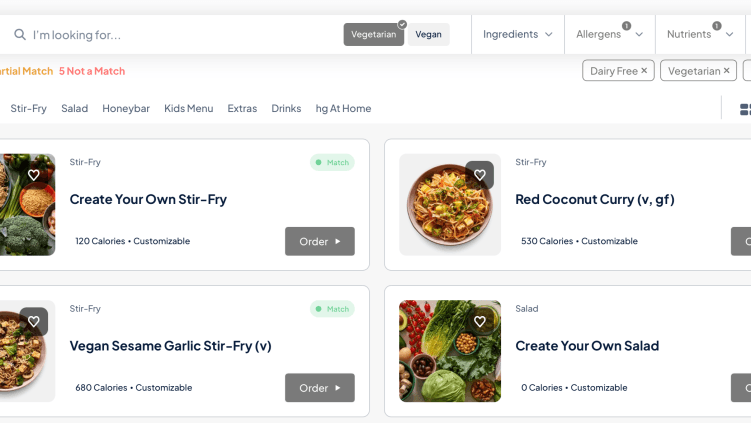
Fast forward to today: personalization isn’t just about compliance — it’s about growth. That’s why we built SmartMenu by EveryBite : an ingredient-first platform that turns menu data into revenue.
And the results are clear:
93% of consumers check menus online before visiting
67% are more likely to order when menus are personalized
SmartMenu drives a 46% increase in online orders
Restaurants see a 24% boost in profit margins
Together, we’re unlocking a $133B+ dining market of guests with allergies and dietary preferences
What began with a garage idea is now powering menus across thousands of locations — helping restaurants future-proof their business, win loyalty, and capture untapped revenue.
👉 See our latest SmartMenu results from the last 9 months of guest interactions:
Ingredient Transparency → Dishes with full ingredient lists get 4× more views
Dietary Filters (gluten-free, vegan, keto) → 3.6× engagement
Allergen Callouts (nuts, dairy, soy) → 2.8× engagement
Accessing Filters → Guests who use filters drive a 46% add-to-cart rate
Multi-Filter Searches (e.g., vegan + low carb) → Highest levels of interaction
Mobile Engagement → 60–70% of SmartMenu interactions happen on mobile
Regional Menus → 10–15% better engagement vs. generic
Seasonal Trends → Gluten-free & vegan spike in January; protein & low-carb searches surge in spring/summer; comfort food & allergen callouts rise in fall/winter
The past two decades have shown me one thing: personalization isn’t a passing trend — it’s the future of dining. SmartMenu is just the beginning of how restaurants can turn transparency into trust, and trust into growth.
When guests can filter, search, and personalize their shopping experience, engagement, loyalty and revenue follow. For restaurants, the question isn’t if personalization pays off, but how quickly you’re ready to capture it.
The opportunity ahead is massive, and we’re only scratching the surface.
Until next time — keep unlocking the $133B opportunity
-Lucy