$3.8M left on the table
That’s how much SmartMenu guests attempted to spend while searching for nutrition + allergen information when dining out. Let me backtrack to add some context here. 10 months ago EveryBite set out to challenge a long-standing myth (or maybe legend): "no one wants this information." Or my favorite "people with food allergies should just stay home."
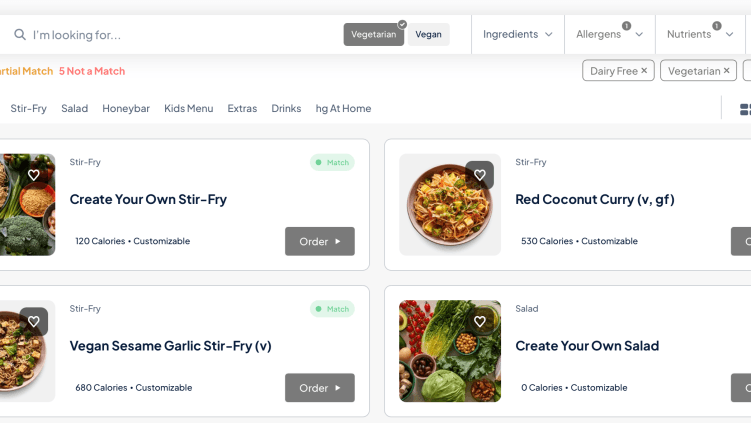
So we did what disruptors do, we tested it. Our goal? Prove whether nutrition and allergen transparency is really bad for business. In January 2025, we added a simple ‘Order Item’ button to SmartMenu. Since then through today, October 3rd, 109,229 guests have tried to place orders directly from SmartMenu. And here’s the kicker: With an average order value of $35, that translates to $3,823,015 in attempted spend.
In a world where:
Margins are razor-thin
Guest traffic is down
1st-party loyalty is everything
...we are still giving 85M people static PDFs for nutrition and allergens.
I’ve spent nearly 20 years proving the same point:
Transparency isn’t bad for business.
No study shows sales drop from calorie/allergen disclosure.
Personalization is no longer optional — it’s expected
Yet we’re still stuck with “monochromatic” menus. And it’s costing restaurants millions. Let's look at some more stats from SmartMenu around the buying power of this incredibly loyal and important dining audience:
1. Ingredient Transparency as a Purchase Trigger
Guests spend more and order faster when they see ingredients and nutrition up front.
Transparency builds trust → higher conversion and check size.
Habit: “I only buy when I know exactly what’s in it.”
Buying power: These guests represent a loyal, higher-LTV segment (more repeat orders, less churn).
2. Dietary-Preference Guests Are Willing to Pay a Premium
Diners using gluten-free, vegan, keto filters are 3–4× more engaged.
They actively seek out menus that cater to them and are less price-sensitive.
Habit: “I’ll choose the place that respects my diet — even if it costs more.”
Buying power: This group represents a $33B U.S. market, underpenetrated by most restaurants.
3. Allergy-Sensitive Diners Buy with Loyalty in Mind
2.8× more views on allergen-safe items → signals repeat value.
Families with food allergies often make group decisions around the safe option.
Habit: “If I know it’s safe for my child, we’ll keep coming back.”
Buying power: High lifetime value — 24% profit margin boost from loyal repeat customers.
4. Mobile-First Guests Spend in the Moment
60–70% of engagement is mobile, often while on-the-go or deciding in real time.
Habit: “If it’s easy to filter on my phone, I’ll order now.”
Buying power: Mobile optimization directly affects funnel capture — poor UX = lost sales.
5. Regionally-Tuned Buyers Spend More on “Relatable” Menus
+10–15% engagement when menus reflect local habits:
Habit: “I buy what feels familiar, but better optimized for me.”
Buying power: Localization = higher conversion, better promo ROI.
6. Seasonal Health Shifts = Temporary Spending Surges
January: “Resolution” buying (vegan, gluten-free).
Summer: “Fitness” buying (protein, low-carb).
Winter: “Comfort” buying (indulgent + allergen safety).
Habit: “My diet changes with the season — and so does my wallet.”
Buying power: Seasonal lifts of 20–30% in certain searches = timing promotions boosts ROI.
7. Polarized Ingredient Buyers
Same ingredients (e.g., beef, bacon, milk) appear on both most included and most excluded lists.
Habit A: “I want indulgence (bacon, cheese, butter).”
Habit B: “I actively avoid those for health or dietary reasons.”
Buying power: Menus that offer both indulgent and restricted paths capture both sides of the spend instead of losing one.
As an industry should we: preserve the past with static menus, or shape the future of dining with personalization?
Ready to unlock millions in guest spend? Let’s talk about making your menus smarter. Send me a DM or comment below!
Until next week..
Lucy